

Where It Almost All Began: Sorrosal
It was 2013 or 2014. I was on holiday with my then-partner and her family, who had a converted camper van invited me to spend a summer travelling through Austria, Switzerland and, finally, the Pyrenees. I remember that trip for many good reasons, but there was one in particular that I could never have imagined would leave such a mark on me.

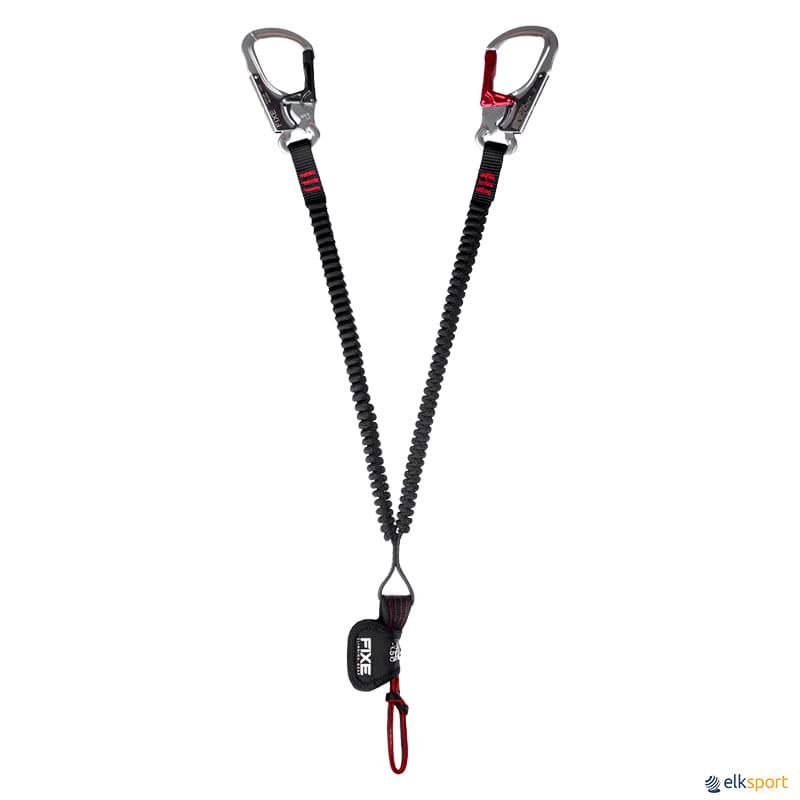
We were sleeping at the Bujaruelo Campsite. The night before, Miguel Ángel, my former “father-in-law”, had told me: “Tomorrow, you and I are going to do something. We’ll need to get up early.” With those mysterious words, I went to sleep wondering what the hell we were going to do. Then, at eight in the morning, I crawled out of the tent with eyes like saucers and we headed towards Broto. He was carrying two harnesses, two helmets and two Y-shaped contraptions with carabiners at the end. I had absolutely no idea what they were or what they were for.

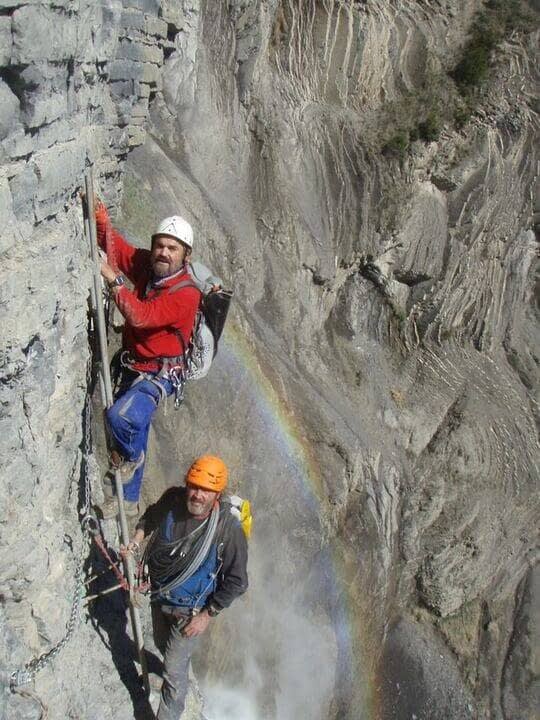
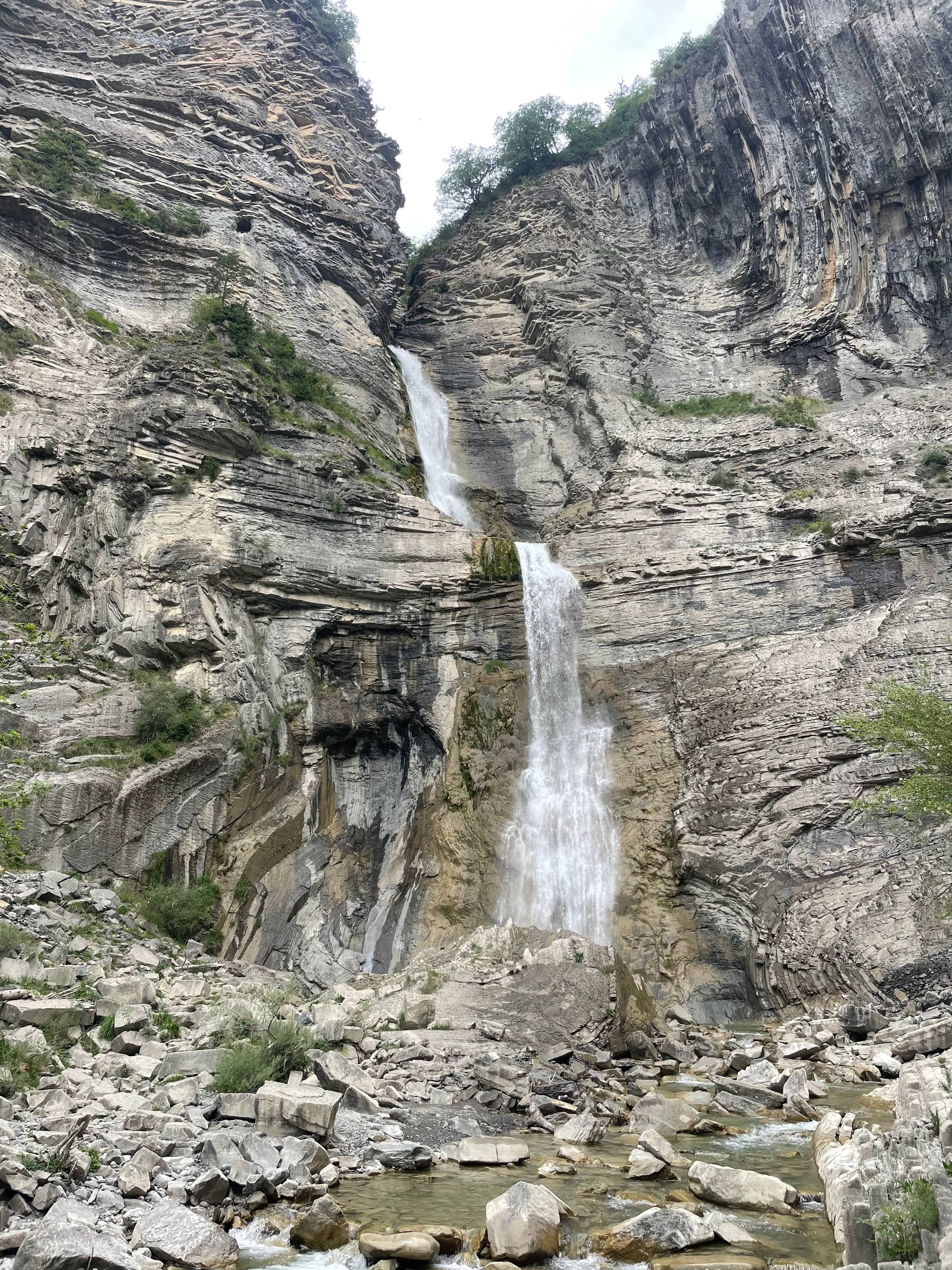
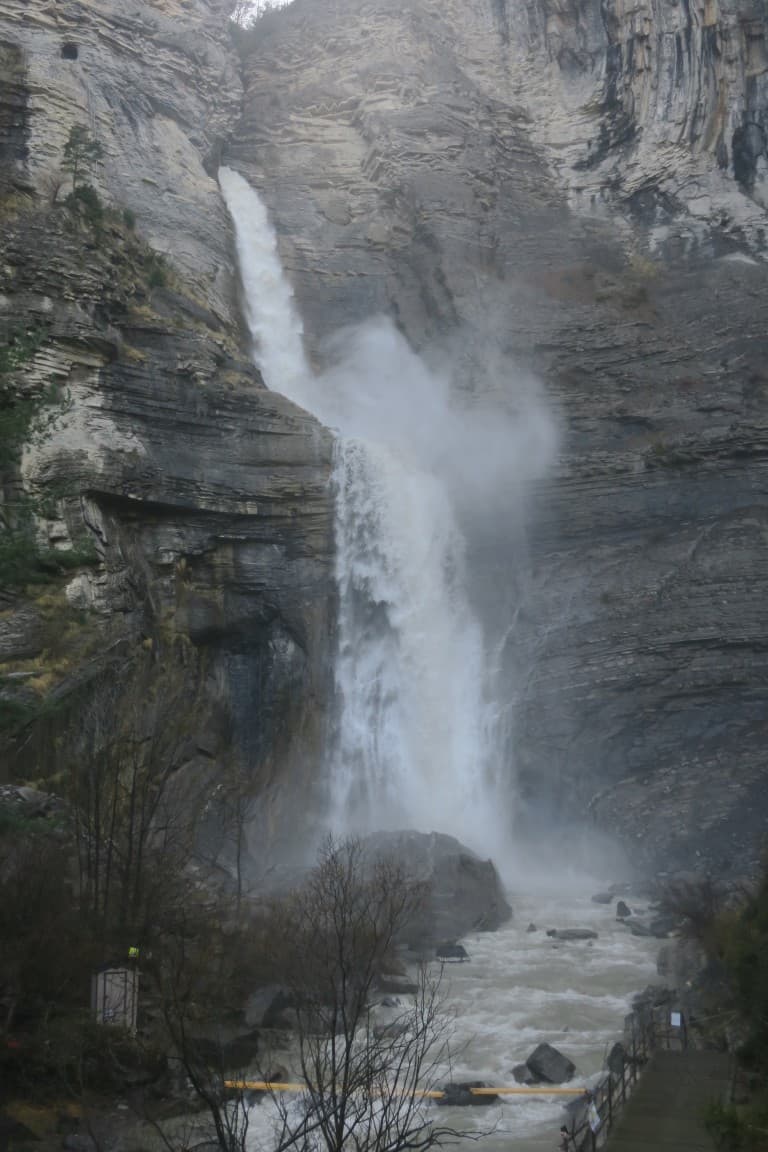
I had never worn a harness before, but I did what I always do when I have no clue about something and someone tells me, “Do this”: I just do it and see what happens. I suppose Miguel Ángel had noticed that I enjoyed messing about and doing reckless things, which is why he suggested the plan. After a short walk, there it was: Sorrosal Waterfall. Nearly one hundred metres of waterfall divided into two sections, with water pouring down at full force. I remember him putting the harness on me, attaching the carabiners to the belay loop with a girth hitch, and saying, “This is called an energy absorber.” “Fair enough,” I thought, before he continued: “Now we’re going to climb up there.” Then he pointed at the waterfall, and I saw the metal ladder climbing alongside it.

I thought it was a joke, but it was not. That was how, after the simple instructions of “Never unclip both carabiners from the safety cable, never put your arm through the rungs, and use your lanyard to rest,” I started my first via ferrata. I was absolutely amazed. I was climbing up a vertical wall with a huge waterfall beside me, and I felt incredibly safe because the fixed equipment on the wall would need a meteorite strike to collapse. It was, for lack of a better word, fucking amazing. I had never been particularly drawn to climbing, but I found this activity to be something in between: being able to climb vertically and get into spectacular places while relying only on my hands and two pieces of equipment.
If I was already completely blown away in every colour of the RGB spectrum, things only got better when, after climbing the ladder sections, I saw someone descending the waterfall on a rope. To make it even more ridiculous, he stopped halfway down, jumped, and landed in the intermediate pool. Later, I would learn that it was around a twenty-metre jump. My face must have been a mix of admiration and the urge to do the same thing, while knowing at that moment that I would never be able to attempt something like that. Then, when we entered the spillway, which was carrying quite a lot of water by the way, came out through the other side of the tunnel and found the river gorge completely full of crystal-clear water... I knew I had fallen in love with this sport.
Returning to the Ferrata
It took two failed attempts and a couple of other via ferratas before I returned to Sorrosal. It happened during this recent trip to the Pyrenees, after summiting Monte Perdido. We woke up in Broto intending to do it and, since we also had canyoning experience, decided to climb the ferrata, walk to the village of Fragén and descend the canyon afterwards. I could not think of a better way to treat myself: returning to my favourite ferrata and combining it with what is now one of my favourite activities in the mountains and outdoors.

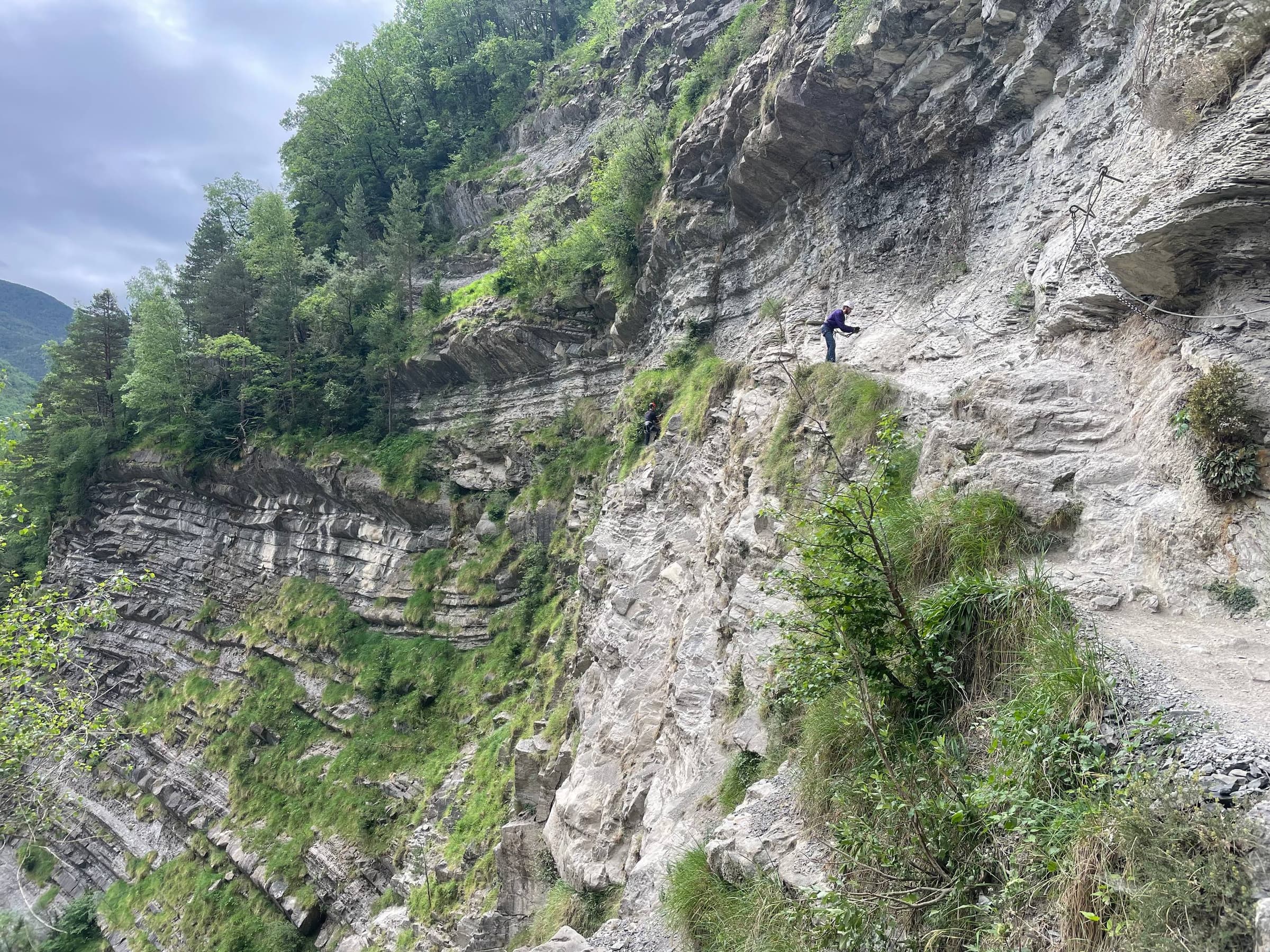
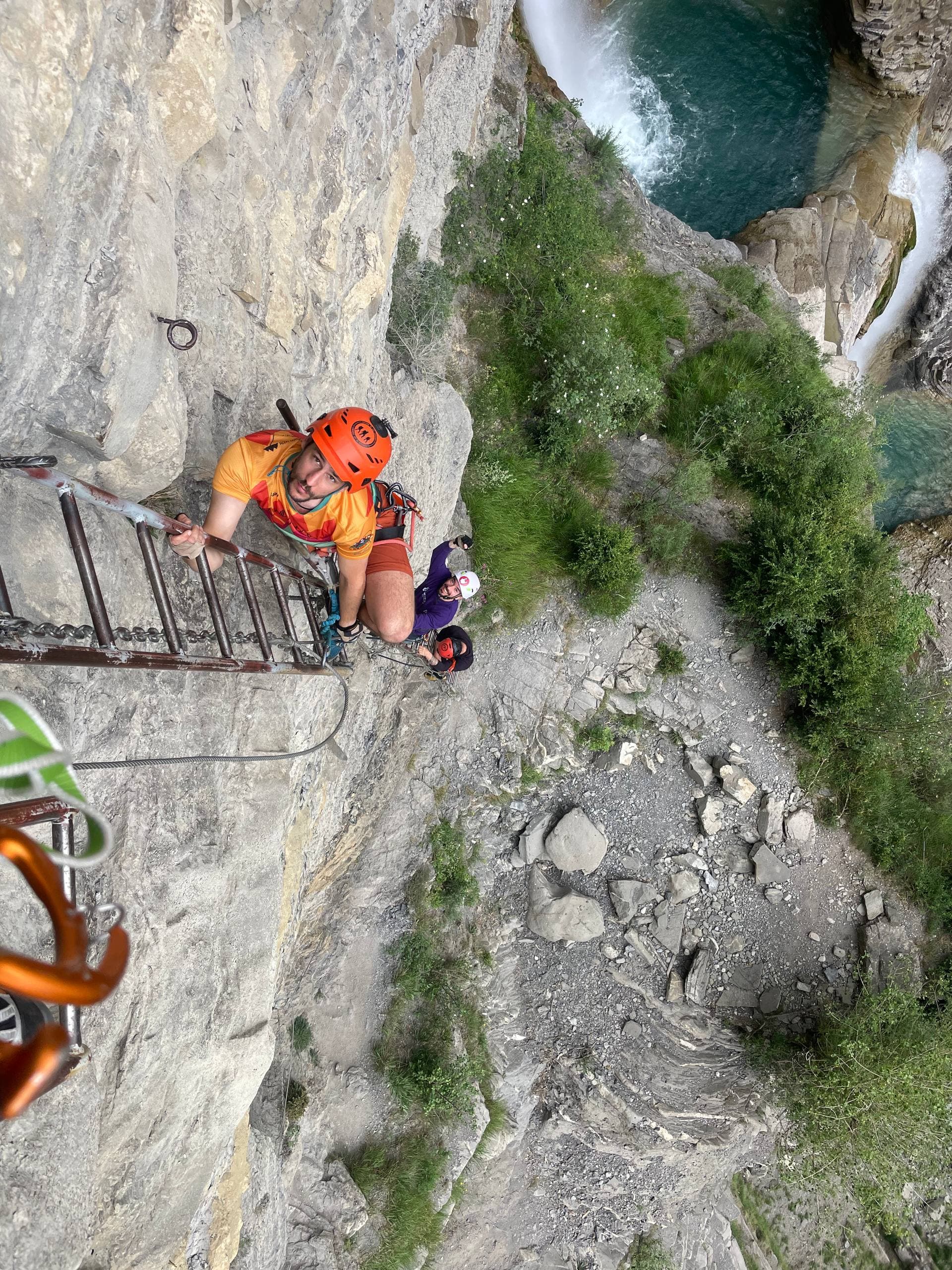
So we got up early, as the plan was to drive a couple of hours to La Leze Cave after finishing, where we would sleep on our way back to Asturias. We left one car in Fragén with all the canyoning equipment so that we would not have to carry it up the ferrata, drove back down to Broto and started the activity. We crossed the river, climbed the ladder while trying to identify the anchors where we would later set up the abseils, and reached the spillway, which was dry this time because the flow was lower.
The Ferrata, Thirteen Years Later
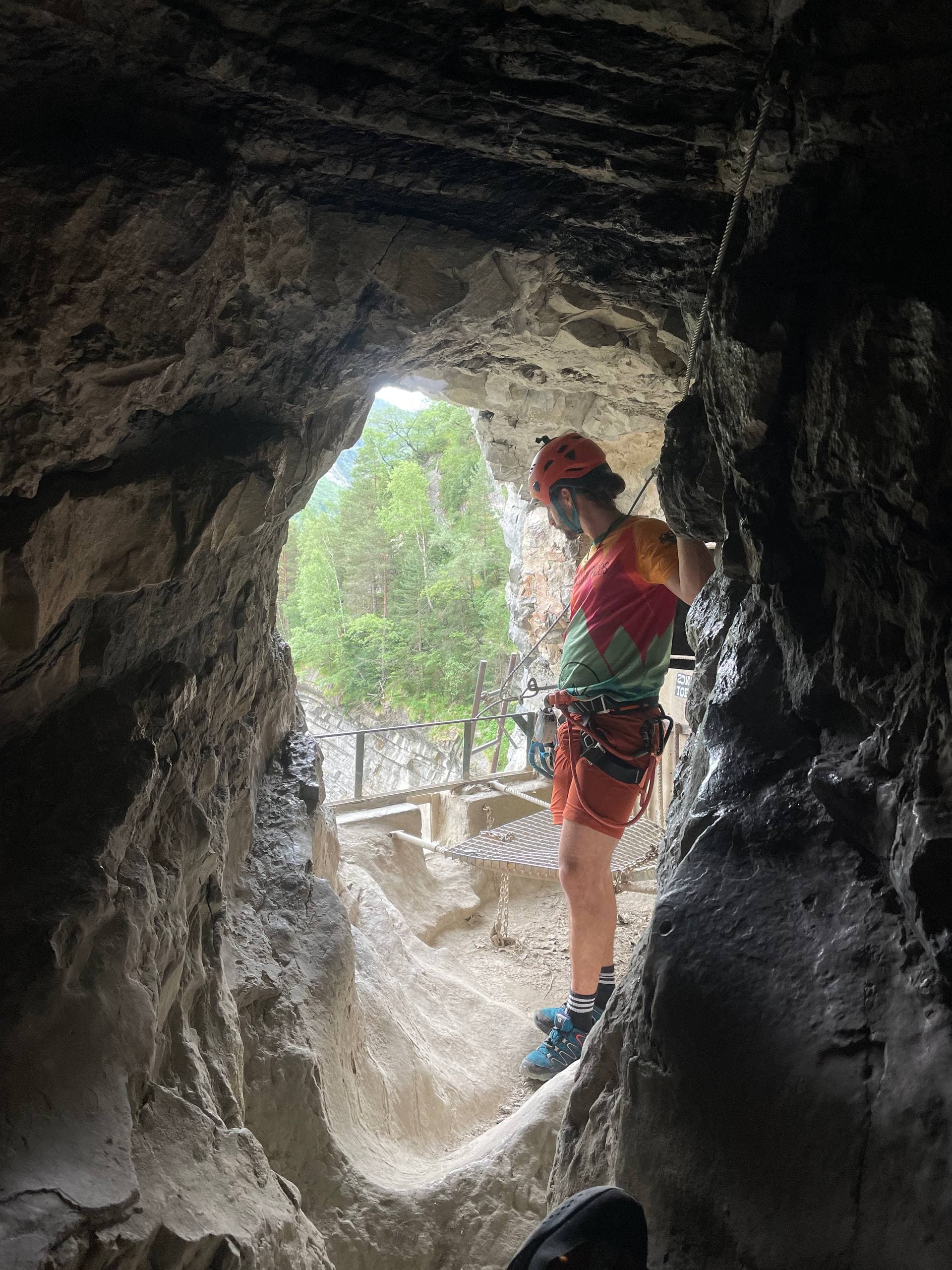
It was exactly as I remembered it. What a wonderful gorge: a K3 ferrata with a Tibetan bridge, no overhangs as far as I could tell, crystal-clear water and the sound of the waterfall. For me, it was like returning to that moment when Miguel Ángel was guiding me through it and reliving it as though it were the same day. What a joy. While we were making our way along the route, a group of canyoners was descending the gorge, so we took the chance to ask them a couple of things. Their only warning was a small drossage in one of the pools, where we would need to be careful and push through the current, or rig a guided abseil for extra safety.

When we came out of the gorge, we were lucky enough to meet one of the people maintaining the route. I do not remember which company he worked for, but he was replacing a section of the safety cable, and we took the opportunity to ask him about the canyon. Part of me wanted to believe that he was the same person who had made that twenty-metre jump thirteen years earlier. When I asked him about it, he kindly showed me a video of himself jumping from the exact spot I had seen while climbing the ladder. To my disappointment, however, he recommended against doing it because of the algae: the chance of slipping and taking a serious hit was pretty high. Better to listen to the person who knows. He also gave us a few recommendations about the pools, slides and jumps, which we would follow to the letter.

From the Safety Cable to the Canyon
¡BARRRRANCO! (CANYOOON!)
With the ferrata finished, we headed towards the canyon. But we had one dropout. That is something worth mentioning and something we should all learn from: Joshua was not having a good day and did not have the right headspace for an activity with this level of risk. He had a couple of tense moments on the ferrata and did not feel focused. Rather than entering the canyon and exposing himself to a potentially dangerous situation, he chose to say so. That is something we should all do. You do not always have the right day to climb, go canyoning, do a ferrata or whatever else. The brave thing is to say it before embarrassment leads to an accident. He decided to take the car and wait for us at the end of the canyon, where he could rest, eat or rub one foot with the other.

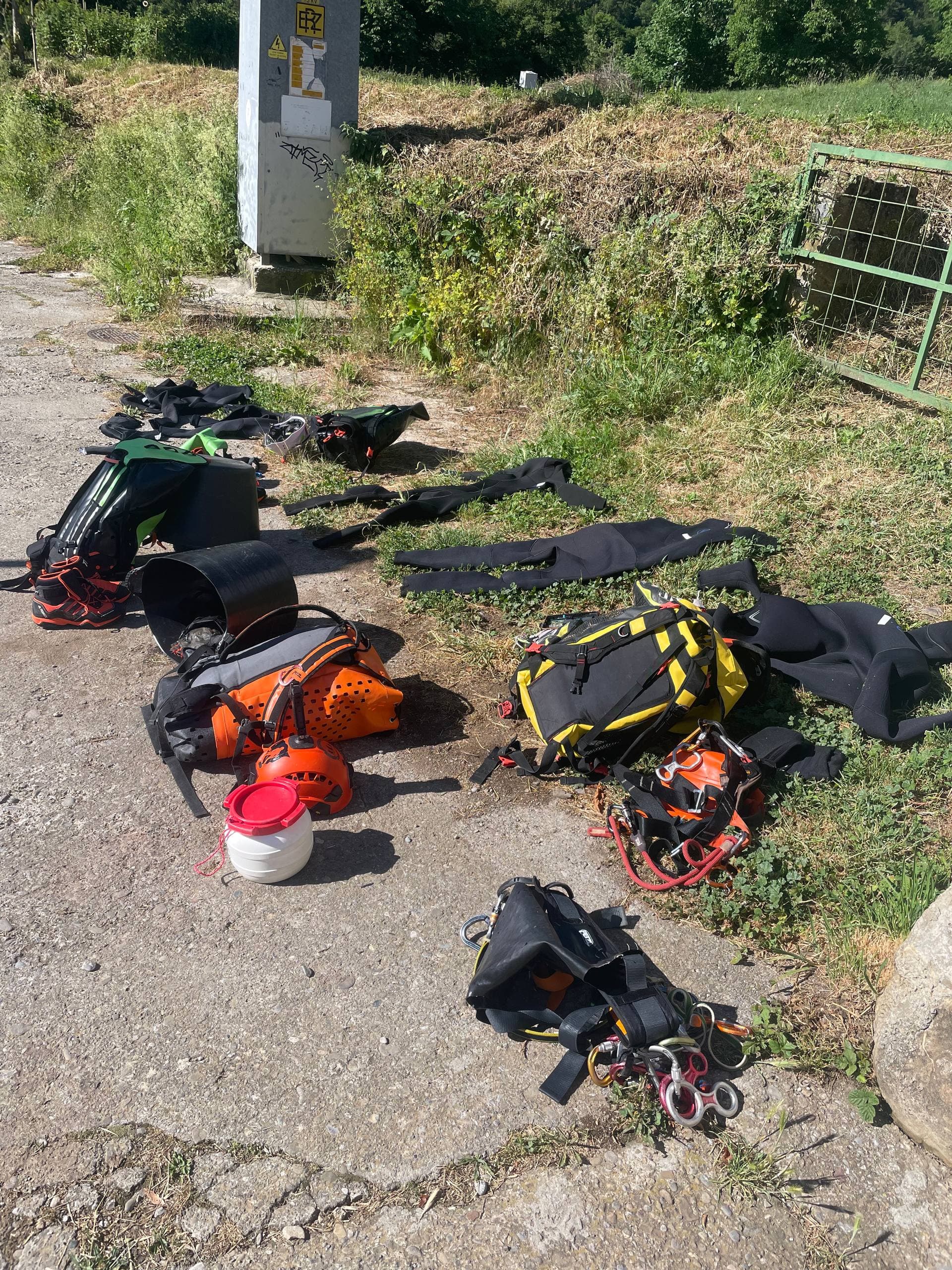
With that, we said goodbye to him, sadly of course, got changed and set off into the canyon. From a watering trough in Fragén, we walked for around five minutes to a bridge over the riverbed, where we changed, rigged the first abseil and entered the river. Although I had never seen it at high flow, it was carrying a decent amount of water in my opinion. I remembered videos of the canyon with an absurd and extremely dangerous amount of water after heavy rain. But the weather was good and so was the temperature. The water was not as cold as I had expected, and what really surprised us was how much grip there was on the rock. In my experience, almost anything is more slippery than the rock in Asturian canyons.

The First Descent
It was wonderful to discover the canyon as we went. We had the topo with us, but in the end we mostly carried it around for decoration. We improvised, explored and tested the small drops before reaching the first jump, which was absolutely spectacular and where things properly got underway. Ernesto, who only a few months ago had said, “I’m not really into getting wet,” was like a pig in mud, jumping, throwing himself down slides and having the time of his life. The only thing missing was our Chova, Joshua, who was probably having a great nap somewhere.

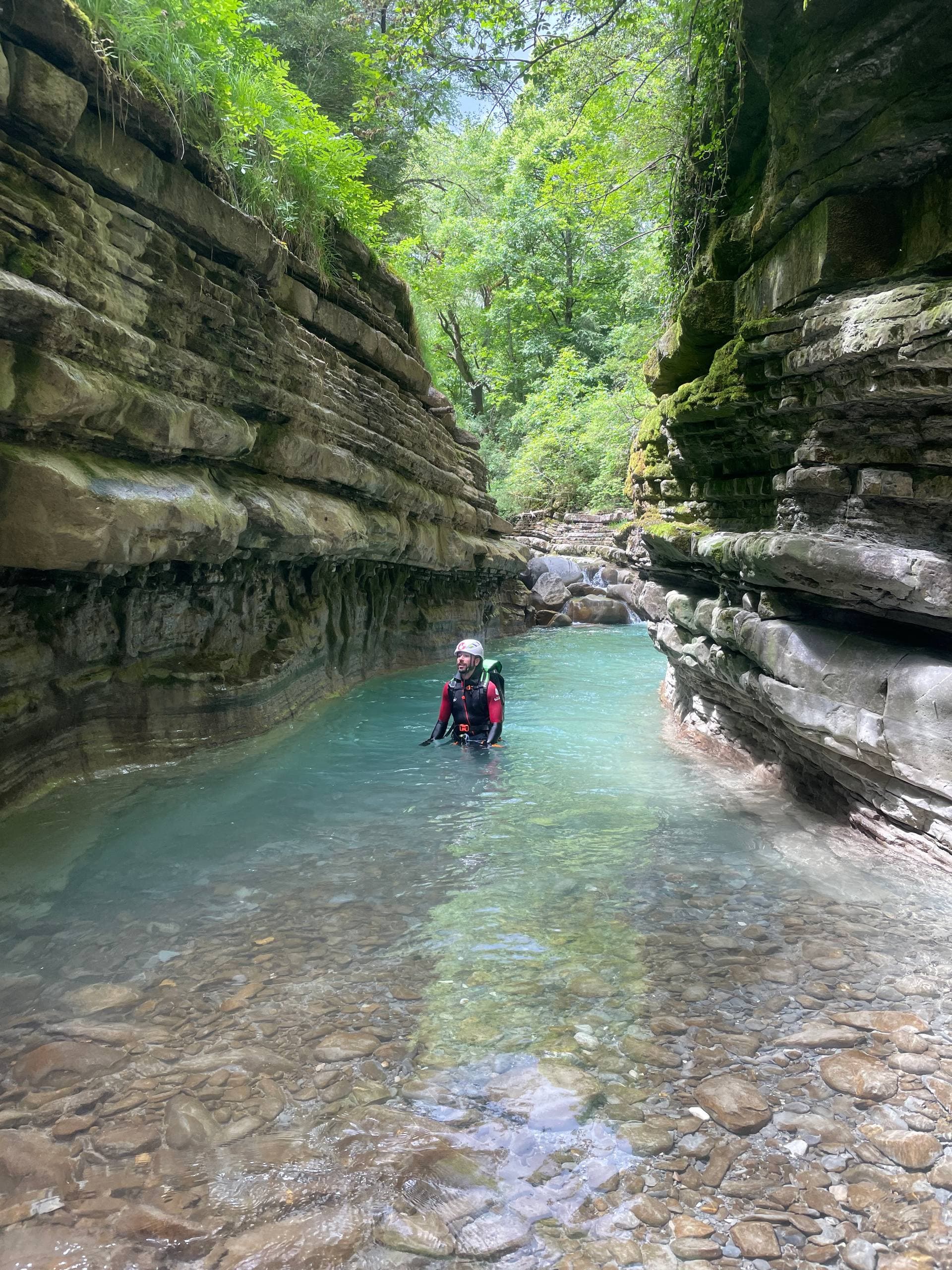
Then came the time to rig abseils and deal with a slightly more committing pool, already in the area where the ferrata ended. Diego rigged a guided abseil using the backpack as an anchor, and it worked perfectly. I decided to jump. It is not a jump I would recommend: it is shallower than it looks, and you need to bend your legs properly on landing. There is also a log wedged across the pool and, with turbulent water, you could jump badly and land on it. That would be a guaranteed disaster. In our case, we could clearly see where it was safe to jump and where it was not, which was why I decided to go for it.
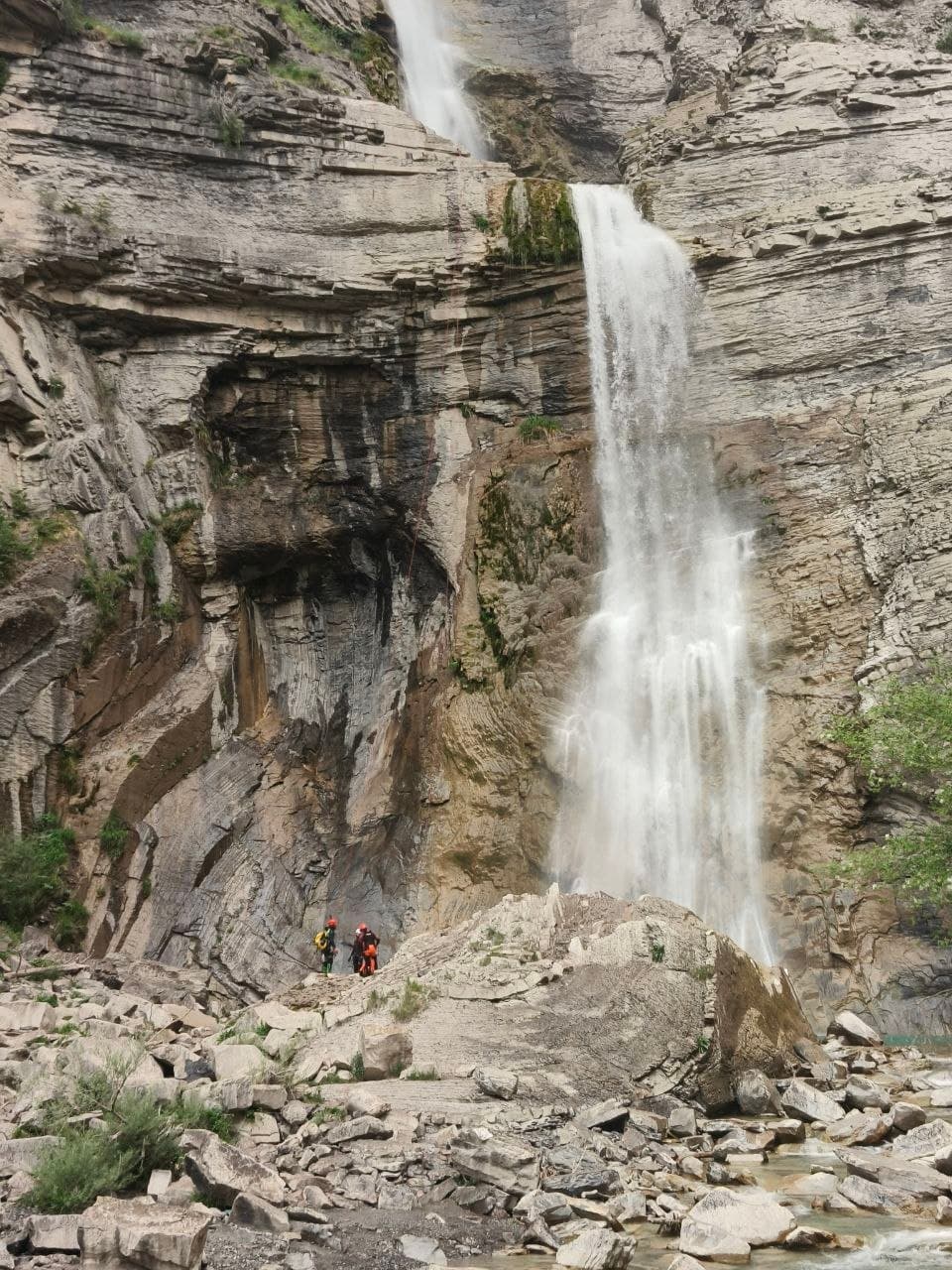
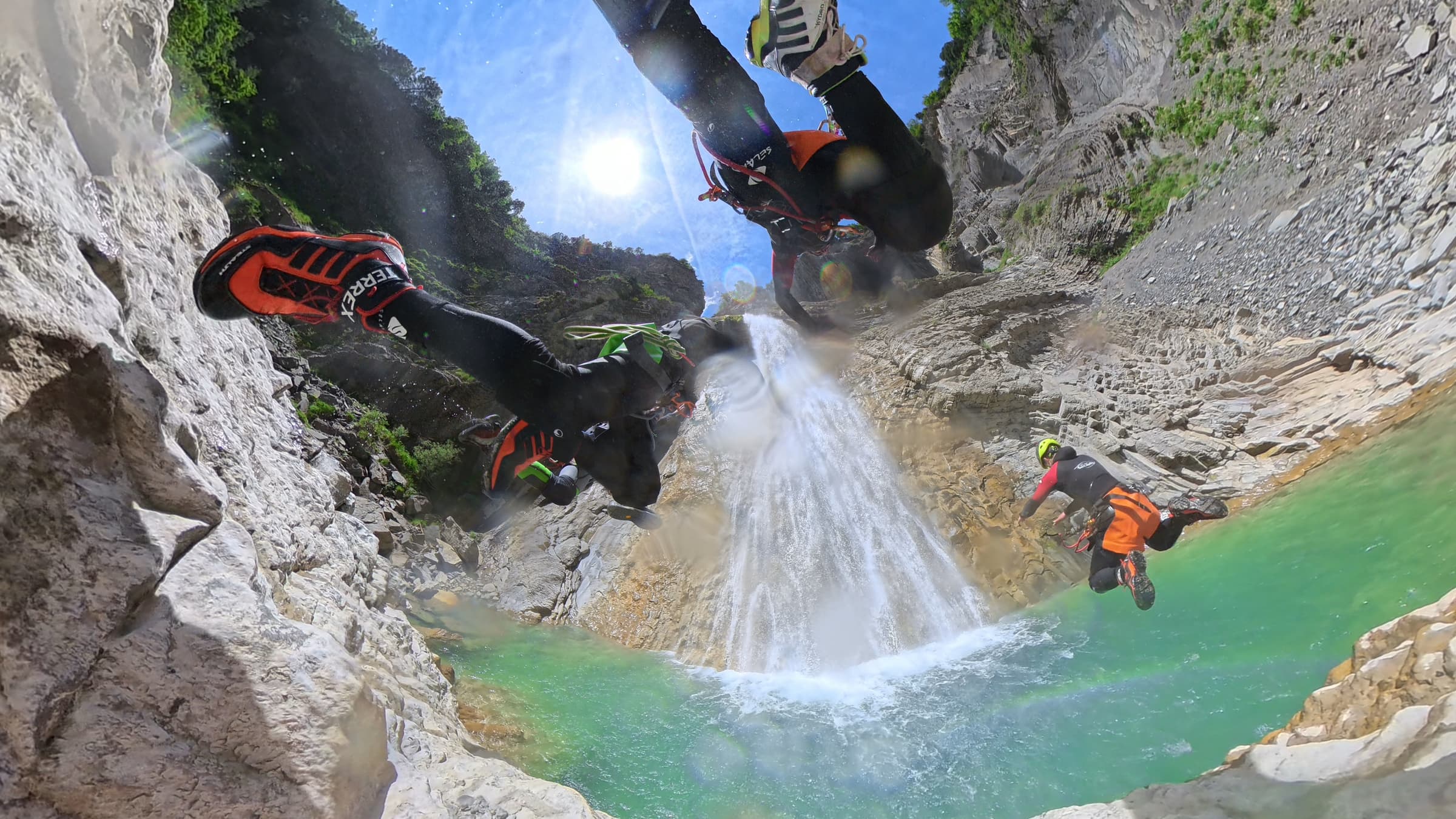
Finally, we reached the last one-hundred-metre waterfall, divided into two sections, which we had climbed just a few hours earlier with ferrata equipment. After a five-metre approach abseil, Diego set up the sixty-metre ropes we had brought to lower ourselves into the intermediate pool. What an incredible abseil. There were two places where you could shelter from the waterfall, and the depth of the pool was impossible to imagine. We then completed the final abseil, where Joshua was already waiting for us, as we had told him it would take around three hours to descend the canyon. He took some photos of us and, at that point, a few drops of rain began to fall. Everything had gone almost perfectly, except for one thing: he was missing. For all the right reasons, but he was missing.

Doing It Again So We Could All Be There
The solution was very simple. We would repeat the canyon the following morning and change our travel plans. At first, it might have seemed as though we were doing it for him, but that was not the only reason: we wanted to do it again too. And if he came along, even better. You have to understand, we had had an incredible time and wanted to repeat it and share it with him.

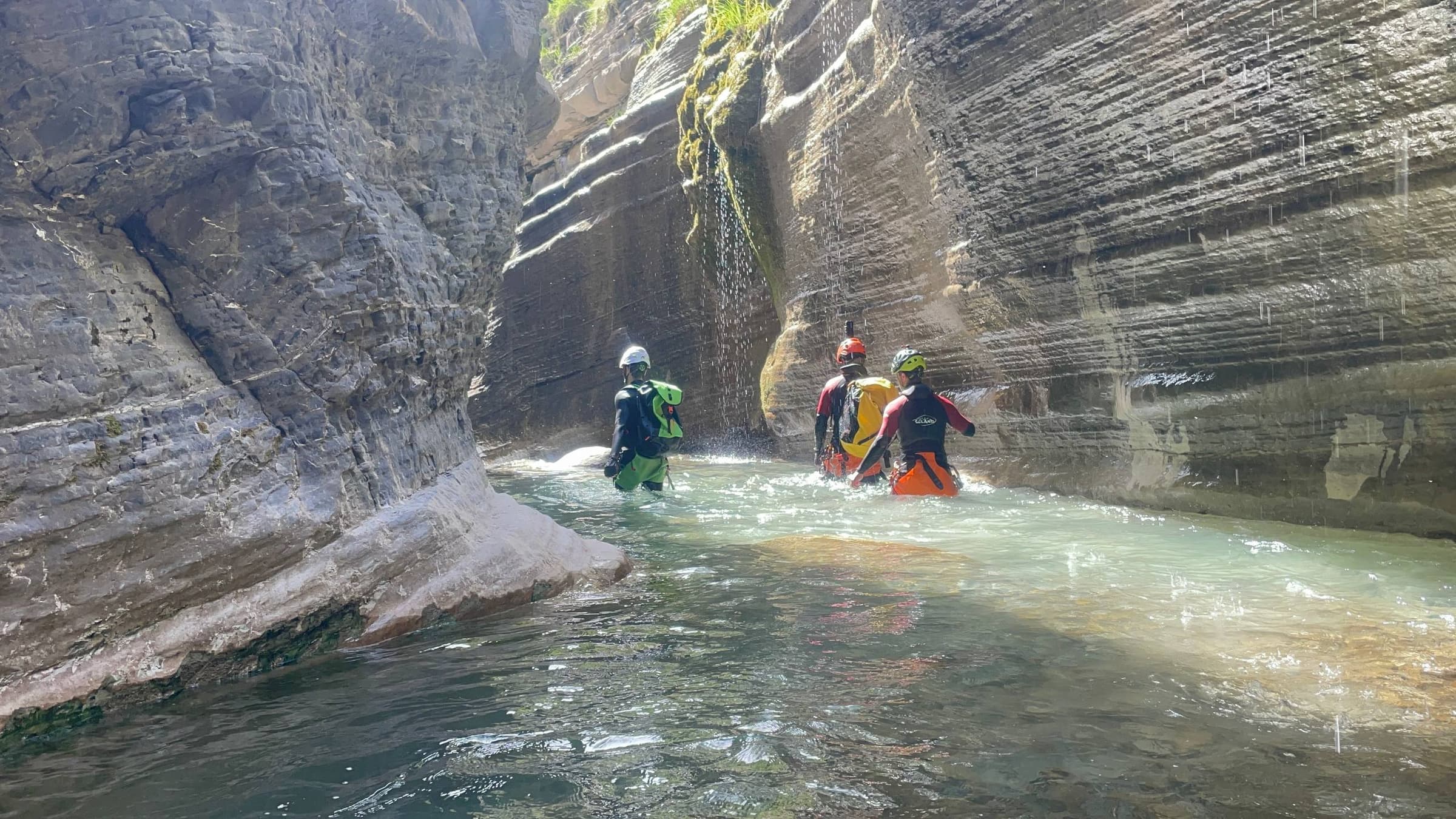
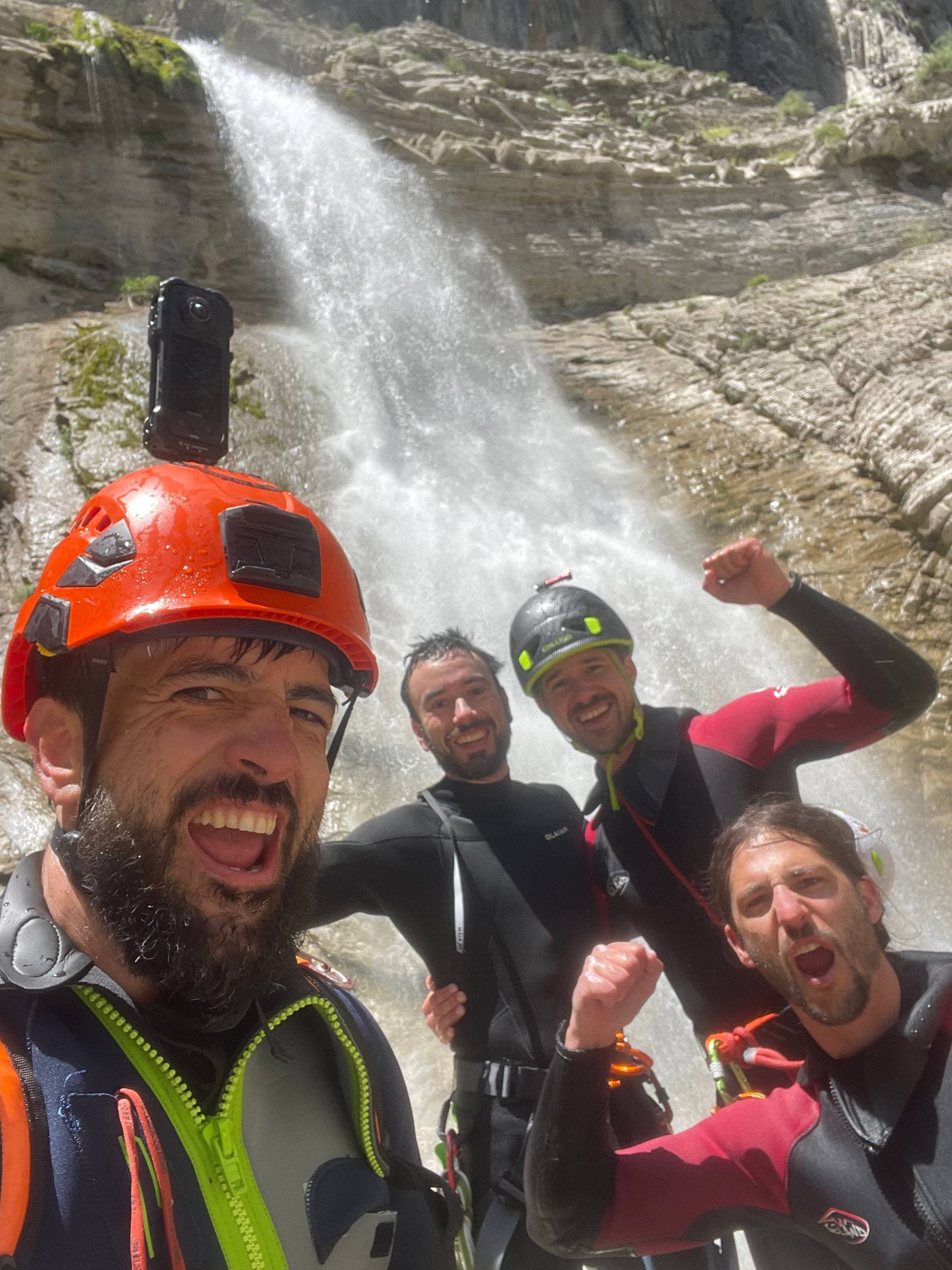
So, instead of driving to La Leze Cave, we stayed in Torla for one more night. The next morning, all four members of the Cordada de los Cabrones would repeat the canyon, this time under glorious sunshine. Now that we knew the pools, jumps, slides and abseils, we could move faster and tell each other exactly what to do and what not to do. And we absolutely loved it. The whole canyon descent was filled with shouts of “IAAA”, “WAKANDAAA” and all sorts of other nonsense, and we abseiled the final waterfalls once more. In my head, I kept thinking that I had finally done it: something I could never have imagined while studying in Madrid, canyoning down Sorrosal Waterfall and thinking about those people with whom I want to share both the ferrata and the canyon again and again.

The Seed That Was Planted
I want to dedicate this post to Miguel Ángel, the person who, without knowing it, planted a seed of madness in me. Or perhaps he simply watered it, because I think I have always been a little crazy when it comes to this kind of thing. These are the fruits of that seed. Thanks to him, in large part, I am doing these things and many more today. I have to thank him because one simple gesture led to a whole series of activities that now define me and make me fucking happy. ¡BARRRRANCO! (CANYOOON!)

Tracks, Videos and a Few Useful Points
Sorrosal Via Ferrata
As always, I am leaving the tracks and videos for both activities below: the ferrata and the canyon, along with a number of notes and waypoints that I consider useful. There is plenty of information available on the Infobarrancos website and elsewhere, such as RocJumper, but I like to contribute my small grain of sand in whatever way I can.
Tap the highlighted area of the card to see the difficulty scale
360° videos must be watched directly on YouTube — embedded players don't support interactive 360° viewing.
Watch on YouTubeSorrosal Canyon
Tap the highlighted areas of the card to discover what they mean
360° videos must be watched directly on YouTube — embedded players don't support interactive 360° viewing.
Watch on YouTube


